The 15 best reverb plugins in 2026: character, space and control
A reverb can bring a voice forward, make a snare seem recorded in another building, or dissolve the edges of a synth. There is no single “best” reverb: a plate, a convolution of a real room and an impossible synthetic tail solve different problems. These 15 current plugins are worth knowing because each offers a distinct answer. The question is not how many controls they have, but when you would reach for them.
How we chose them. We checked features and availability against the makers' product pages and read recent producer and engineer discussions on r/audioengineering and r/edmproduction. This is an editorial ranking, not a poll or a blind listening test. Ultiverb is made by Libelula Audio; we include that relationship plainly and apply the same strengths-and-limitations format to it. Screenshots show plugin interfaces, which may change across versions.
Quick guide: which reverb should you try?
| If you want… | Start with… |
|---|---|
| An all-rounder with character | Valhalla VintageVerb or FabFilter Pro-R 2 |
| A tail that fits inside a busy mix | Pro-R 2, Ultiverb or Crystalline |
| A convincing physical space | Seventh Heaven Professional, Capitol Chambers or Altiverb 8 |
| A plate with personality | SuperPlate, Rev PLATE-140 or UAD EMT 140 |
| Free ambient sound design | Valhalla Supermassive or NI Raum |
1. Valhalla VintageVerb: the classic that still earns its place
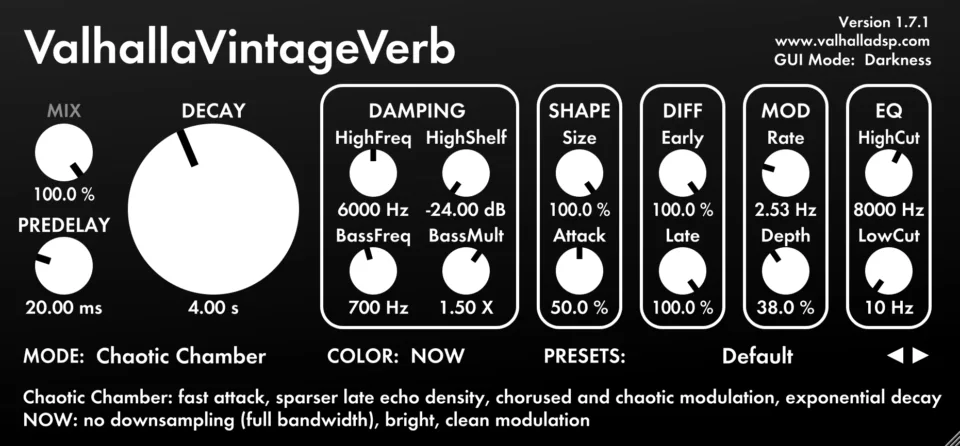
If someone wanted a first algorithmic reverb to learn and keep using, this would be an easy recommendation. VintageVerb moves from dark, dense tails to more open spaces without turning sound selection into a technical chore. Its algorithms and color modes have an identity of their own, which is why it works on pop vocals, pads and snares alike.
The catch: its appeal is colored digital reverb, not a painstaking recreation of a particular room. For a source that needs to sit in a recognizable real space, I would look at Altiverb or Seventh Heaven. Explore VintageVerb at Valhalla DSP ↗
2. FabFilter Pro-R 2: precision that does not break your flow
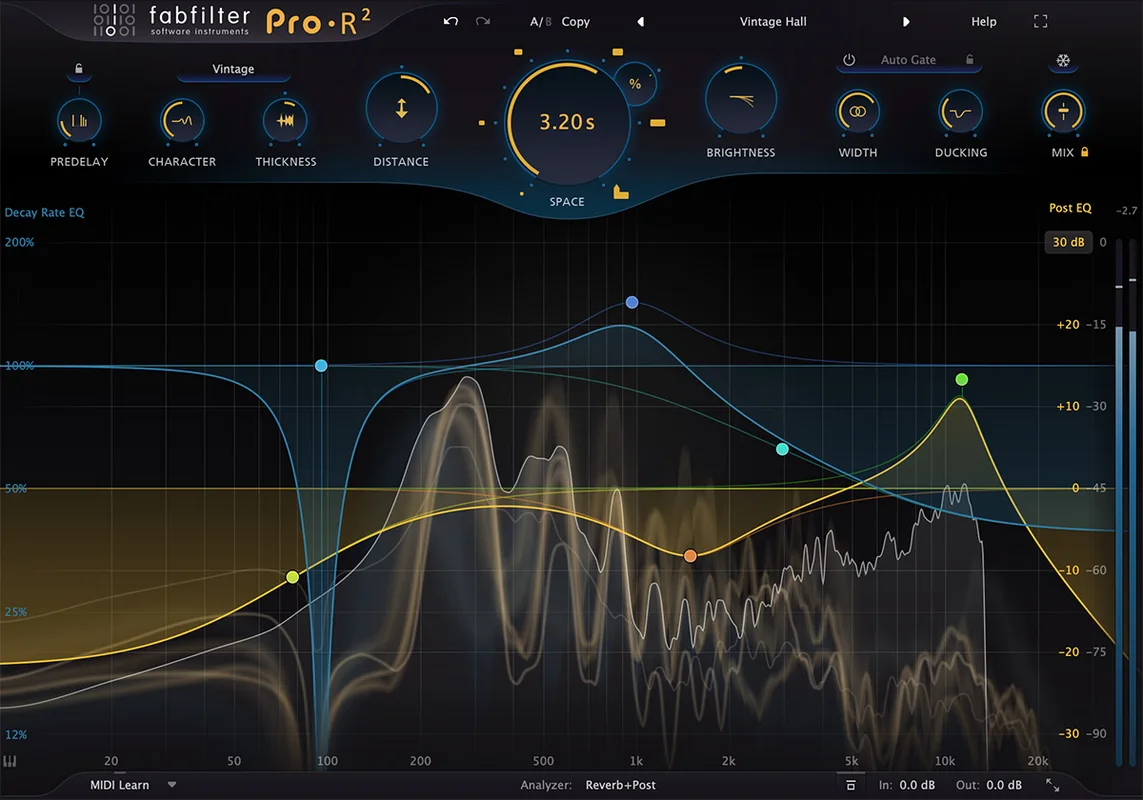
Pro-R 2 is the answer when a reverb sounds lovely in solo but clouds the song. Decay Rate EQ changes how long different frequencies linger; Post EQ shapes the result, and ducking makes space for the dry signal. Some reverbs are more dramatic at first click, but few make fine decisions this easy without leaving the plugin window.
The catch: all that control can invite needless tweaking. If a strongly marked plate is what you want, SuperPlate might get you there sooner. Explore Pro-R 2 at FabFilter ↗
3. Ultiverb: an unusual amount of control for free
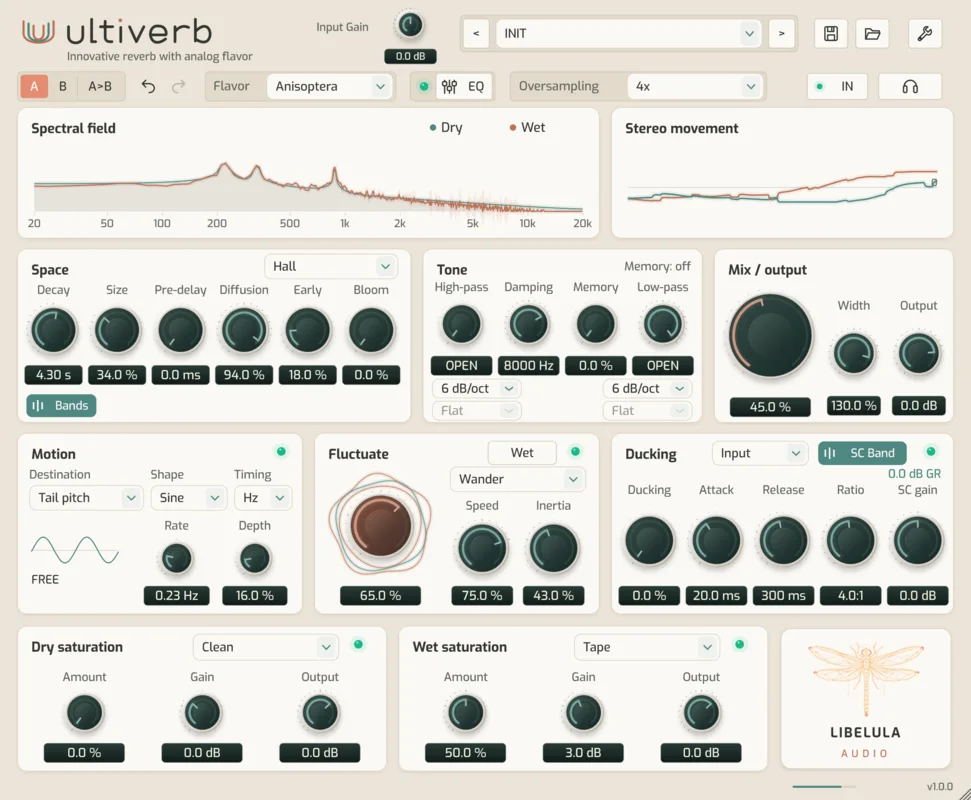
Ultiverb lands in third place for a combination that is uncommon in a free reverb: five spaces, three decay-shaping zones, two wet-signal EQs, ducking with a configurable detector and external sidechain, separate dry and wet saturation, oversampling and Fluctuate. Fluctuate adds audible variations inspired by the small imperfections of analog equipment. That is not a claim of magical “analog sound”; it is a way to shift the character and movement of the tail. Taken together, these controls let you work the reverb into a mix rather than just lay it over one.
The catch: it is currently a Windows x64 VST3 only. The plugin is free, but downloading it requires a subscription and a verified account. We would not claim every feature is unprecedented; other reverbs offer EQ, ducking or frequency-dependent decay. Bringing this particular toolkit together at no cost is what stands out. Explore and get Ultiverb ↗
4. LiquidSonics Seventh Heaven Professional: believable depth
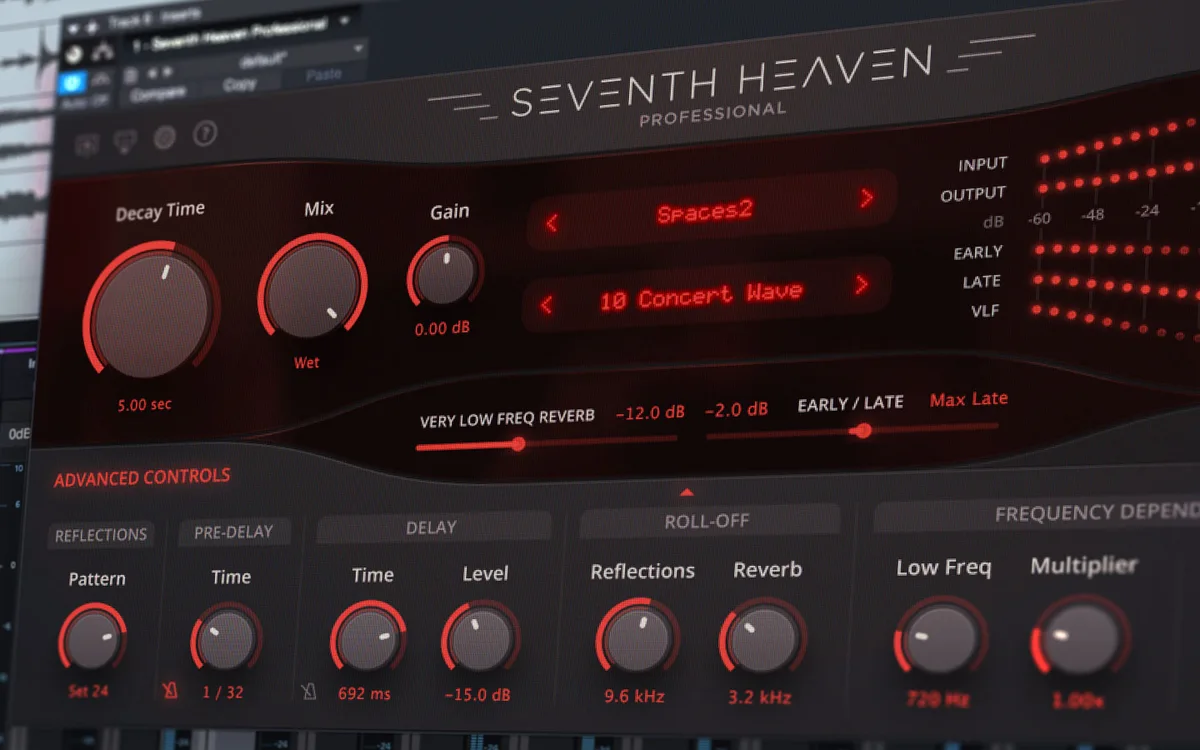
Its strength is a sense of three-dimensional space and a tail that does not feel static behind the source. LiquidSonics draws on the character of the Bricasti M7 through Fusion-IR technology. On acoustic instruments and vocals, especially when you want depth without an obvious special effect, it remains a serious reference point.
The catch: this is not the first tool I would open for a deliberately unreal texture or surgical multiband decay editing. Check its licensing requirements before buying. Explore Seventh Heaven Professional ↗
5. Soundtoys SuperPlate: a plate you can push
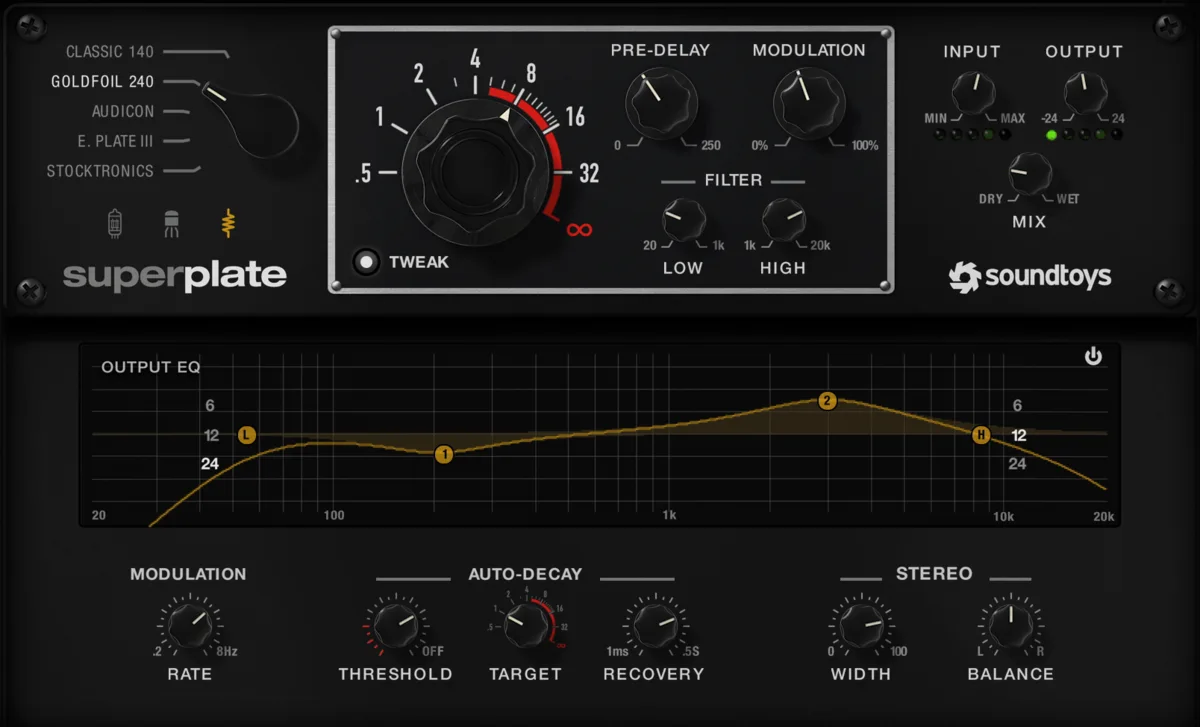
SuperPlate surrounds five plate flavors with ways to move from an elegant vocal space to a gritty, animated tail. The preamp choices, EQ and decay ducking mean it does more than simply produce a pretty plate: you can decide how much character hits the reverb and how much room it leaves for the performance.
The catch: a plate remains an aesthetic choice. For a small believable room or a precise source position, I would choose another kind of reverb. Explore SuperPlate at Soundtoys ↗
6. Eventide Blackhole: space beyond scale
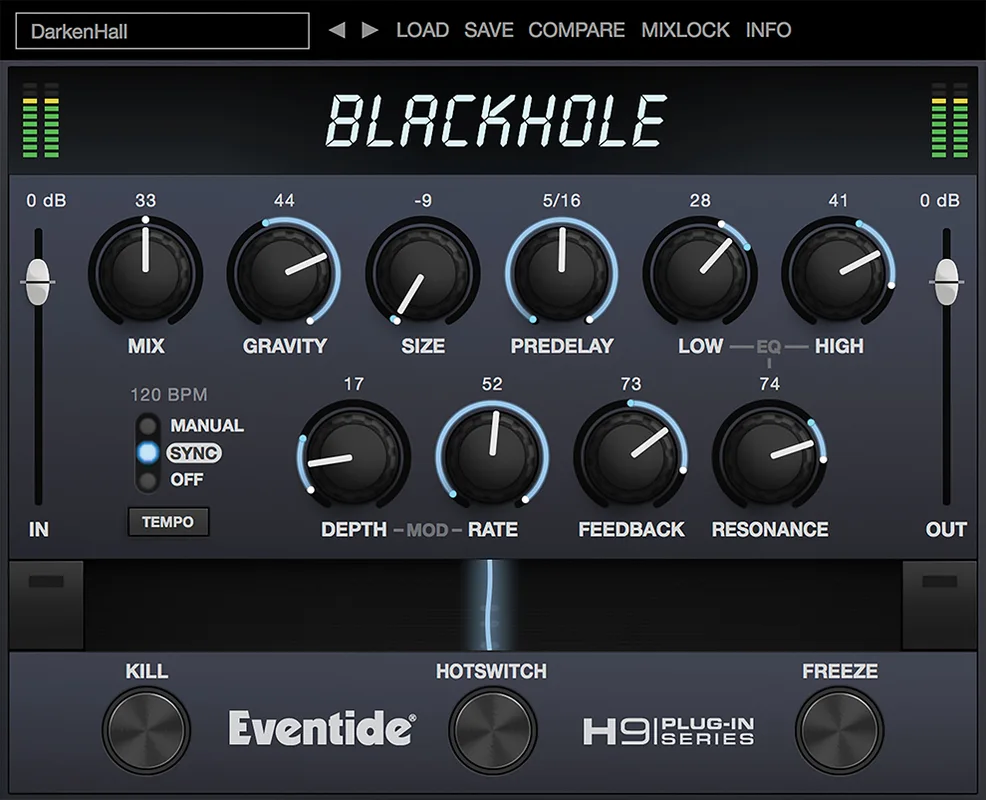
Blackhole is not trying to persuade you that the singer stands in a small studio. It creates enormous surfaces, suspended tails and transitions that become part of an arrangement. Gravity, Size and modulation move easily between broad atmosphere and overt sound design. In ambient, film and experimental electronic music, it behaves more like an instrument than a simple effect.
The catch: without filtering or automation, it can swallow the definition of a mix. It would not be my first choice for subtly placing an intimate lead vocal. Explore Blackhole at Eventide ↗
7. UAD Capitol Chambers: the value of a room with history
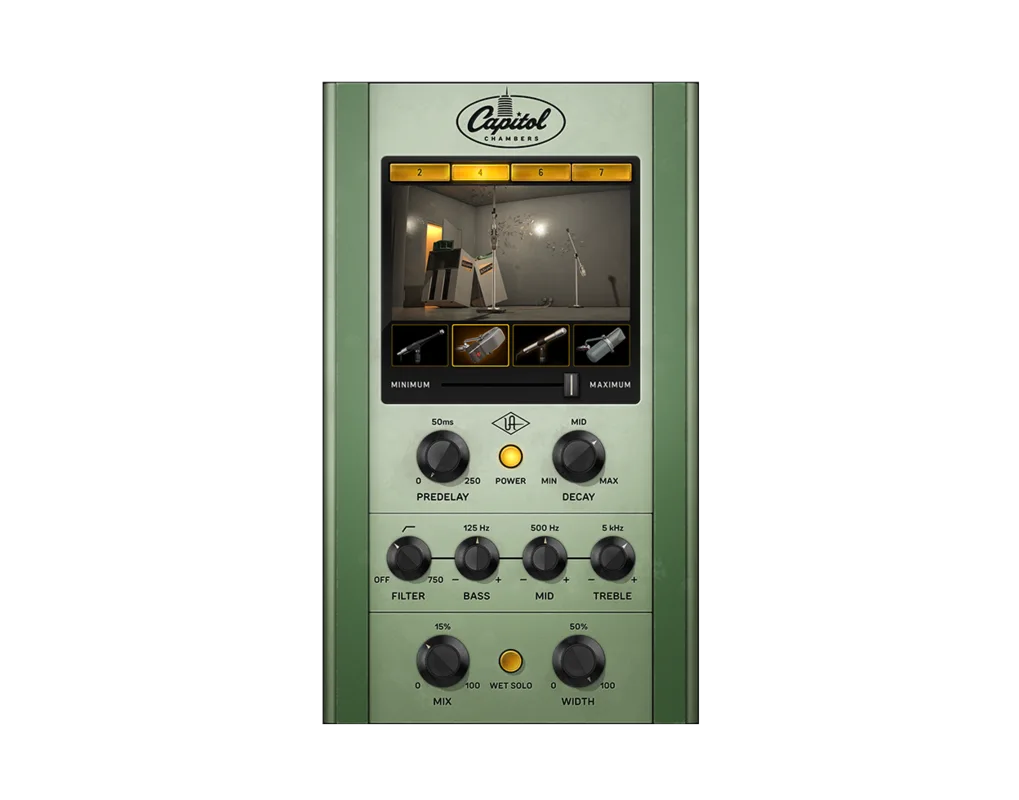
The attraction here is not an abstract space but a signal placed inside chambers associated with Capitol Studios. Position, microphone and signal-path choices affect perspective in a musical way. It can give vocals, strings or brass a depth that feels like part of the recording rather than an effect pasted on later.
The catch: if you need a synthetic reverb that mutates every bar, its specialization becomes a limitation. Explore Capitol Chambers at UAD ↗
8. Relab LX480 Dual-Engine: big digital sheen
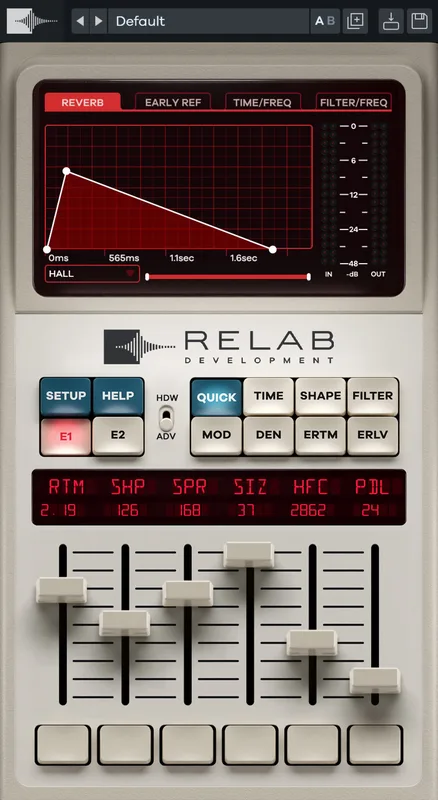
There is a reason grand studio digital reverbs have never gone away: their tails can feel wide and silky while leaving the center of a mix intact. Relab revisits that world and adds two independent engines for more involved configurations. It is especially appealing when the space should be heard as part of a polished pop production.
The catch: a hardware-inspired interface takes some learning. If you prefer drawing curves with a mouse, Pro-R 2 may feel more immediate. Explore LX480 Dual-Engine ↗
9. Audio Ease Altiverb 8: places you can almost recognize
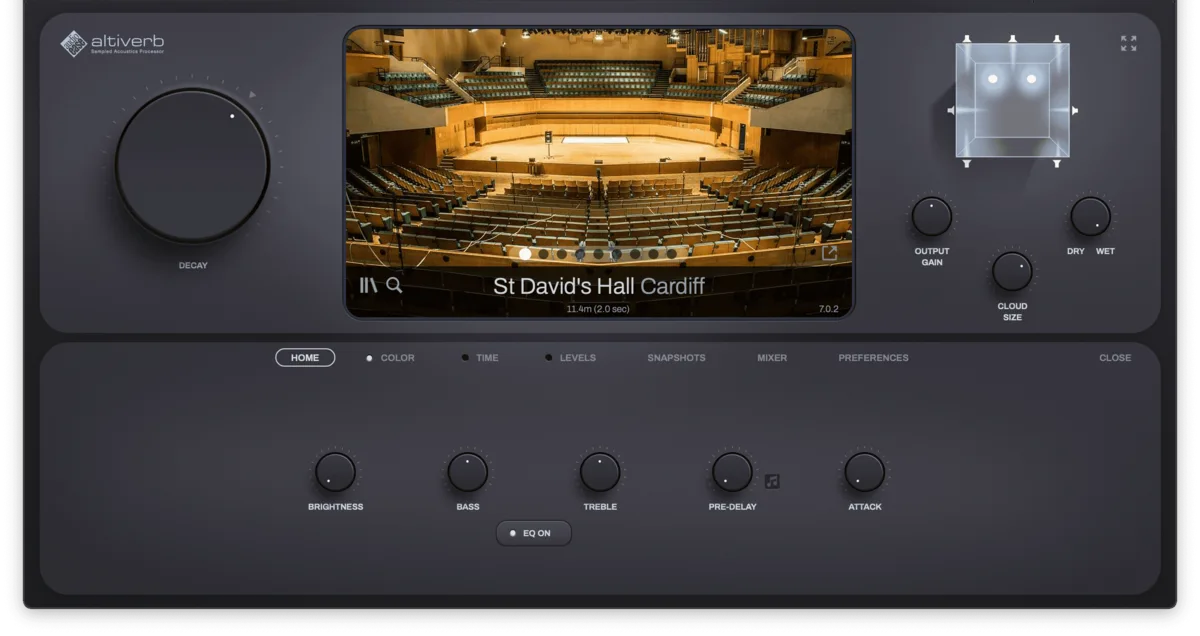
Convolution asks a different question: “What would this source sound like in this place?” Altiverb's impulse-response library spans halls, stages and unusual environments. For post-production and acoustic music, choosing a particular location can be faster and more persuasive than designing a room from scratch.
The catch: its value is tied to captured spaces and that library. It is not the obvious choice for drawing an impossible synthetic tail. Explore Altiverb 8 at Audio Ease ↗
10. Baby Audio Crystalline: clean, flexible and rhythmic
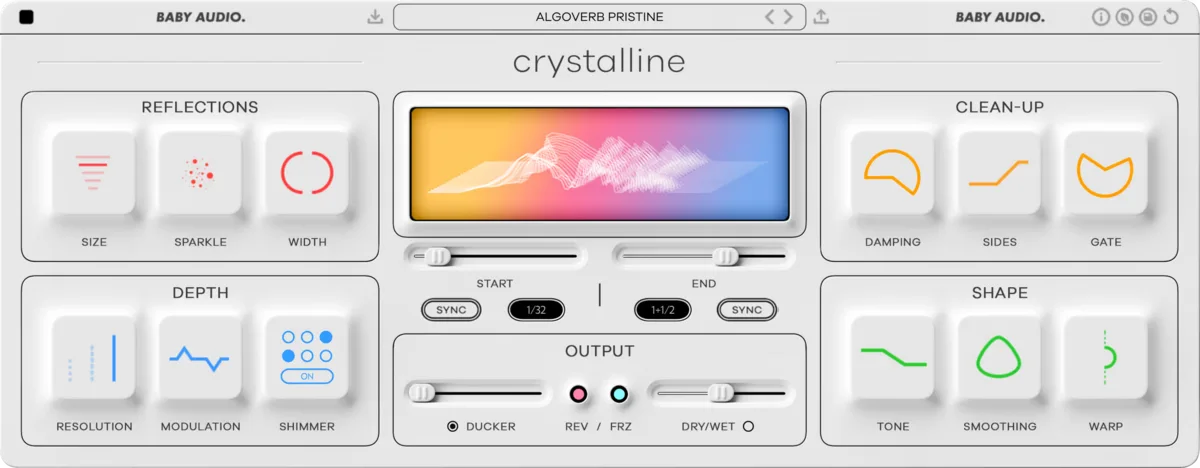
Crystalline has a modern aesthetic and a direct way of thinking about time. Tempo-synced timing, reverse and freeze options, ducking and tonal shaping can turn a clean space into a rhythmic part of the arrangement. On electronic productions and processed vocals, that connection to the pulse is especially useful.
The catch: if you want the rough edge of a vintage plate or a historic chamber, its cleanliness may feel a little too polished. Explore Crystalline at Baby Audio ↗
11. Arturia Rev PLATE-140: get to the plate quickly
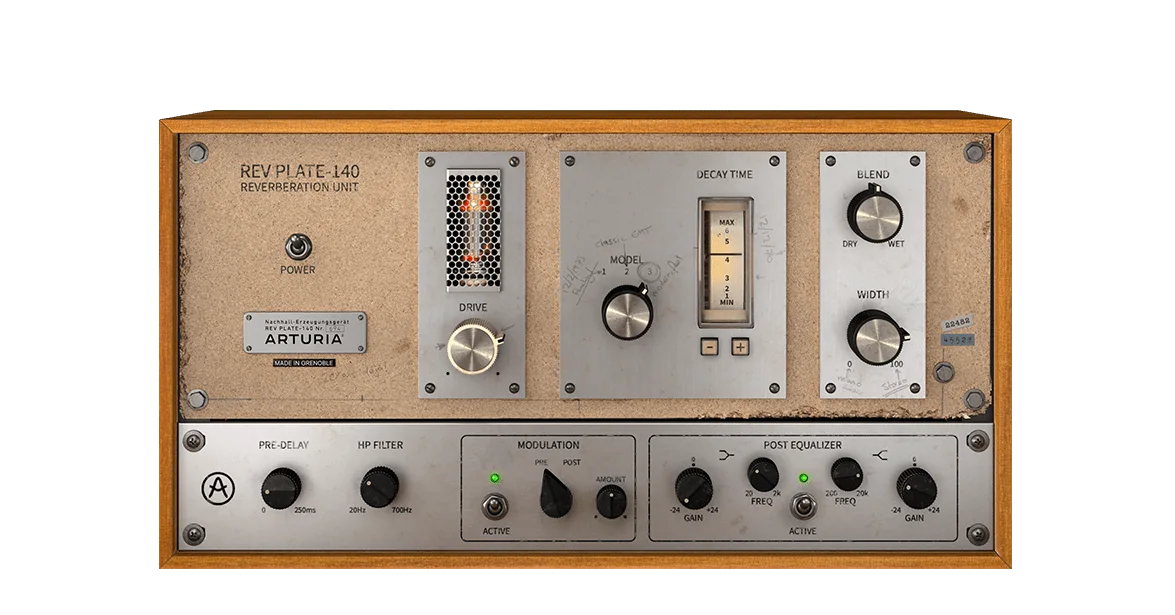
Arturia offers several plate responses in an interface that encourages you to decide by ear and keep working. Preamp, EQ and modulation controls shape the edge of the tail without building a long insert chain. It is a solid pick for snare, voice or guitar when you want plate density and brightness without spending half the afternoon getting there.
The catch: its range is intentionally narrower than that of an all-rounder. Explore Rev PLATE-140 at Arturia ↗
12. Native Instruments Raum: a free creative tool
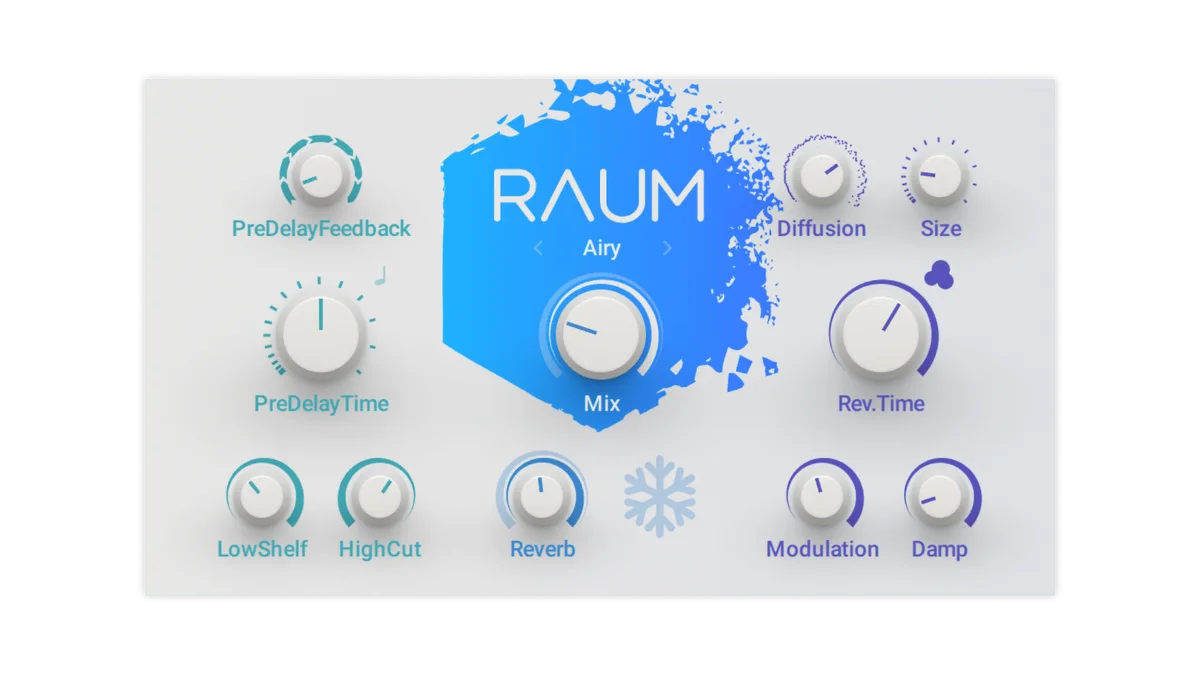
Raum is a fast route to spaces that stretch and move. Its modes and freeze function make it easy to turn a practical reverb into a sustained texture for transitions. Native Instruments currently presents it as free, so it is worth trying before assuming another paid effect is necessary for creative width.
The catch: for a voice in a very particular room, I would choose convolution or a modeled chamber instead. Explore Raum at Native Instruments ↗
13. UAD EMT 140: the classic plate without distractions
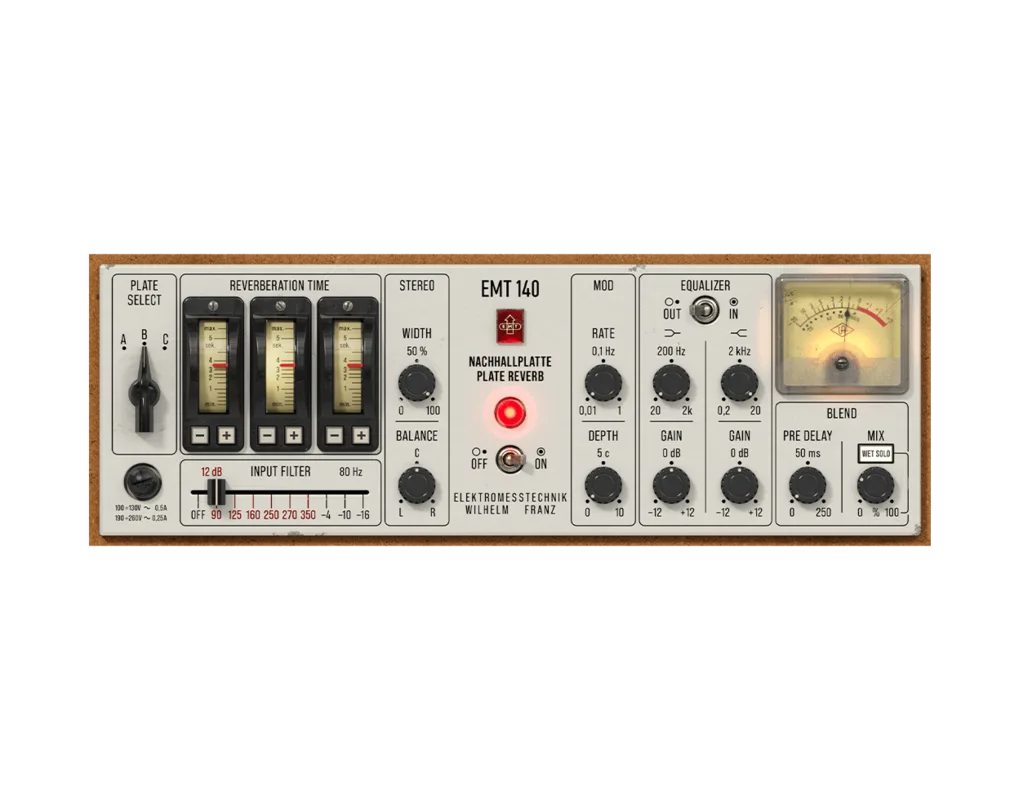
When a vocal or snare calls for a recognizable plate rather than a sound-design dashboard, EMT 140 is still a strong answer. UAD models three plates with different tone and decay behavior. It does not try to be a room, a delay and an ambient instrument at once; that focus can be exactly why you choose it.
The catch: if you need ducking or multiband shaping inside the same window, you will need another plugin or an external chain. Explore EMT 140 at UAD ↗
14. Valhalla Supermassive: cosmic tails without a price tag
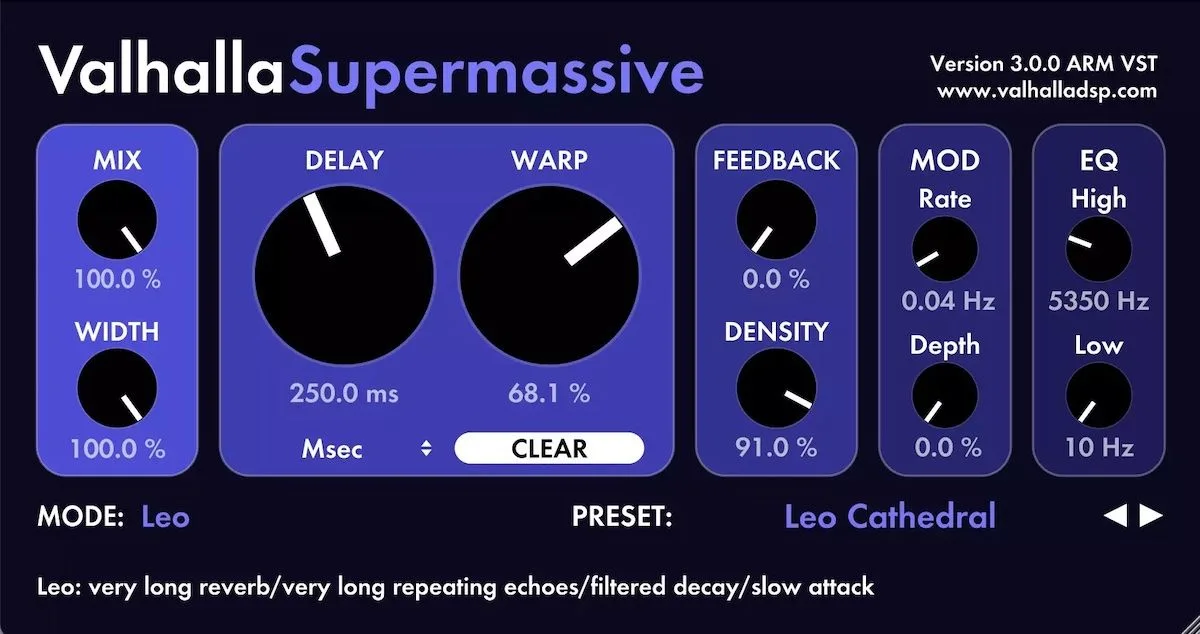
Supermassive lives on the border between delay and reverb. Its modes generate very long echoes, evolving clouds and backgrounds that fill the stereo field. It is free, but not merely a fallback: there are arrangements where its controlled excess is precisely the musical idea.
The catch: do not confuse spectacle with versatility. For a small natural room, it would not be my first stop. Get Supermassive from Valhalla DSP ↗
15. iZotope Neoverb: find a space and keep moving
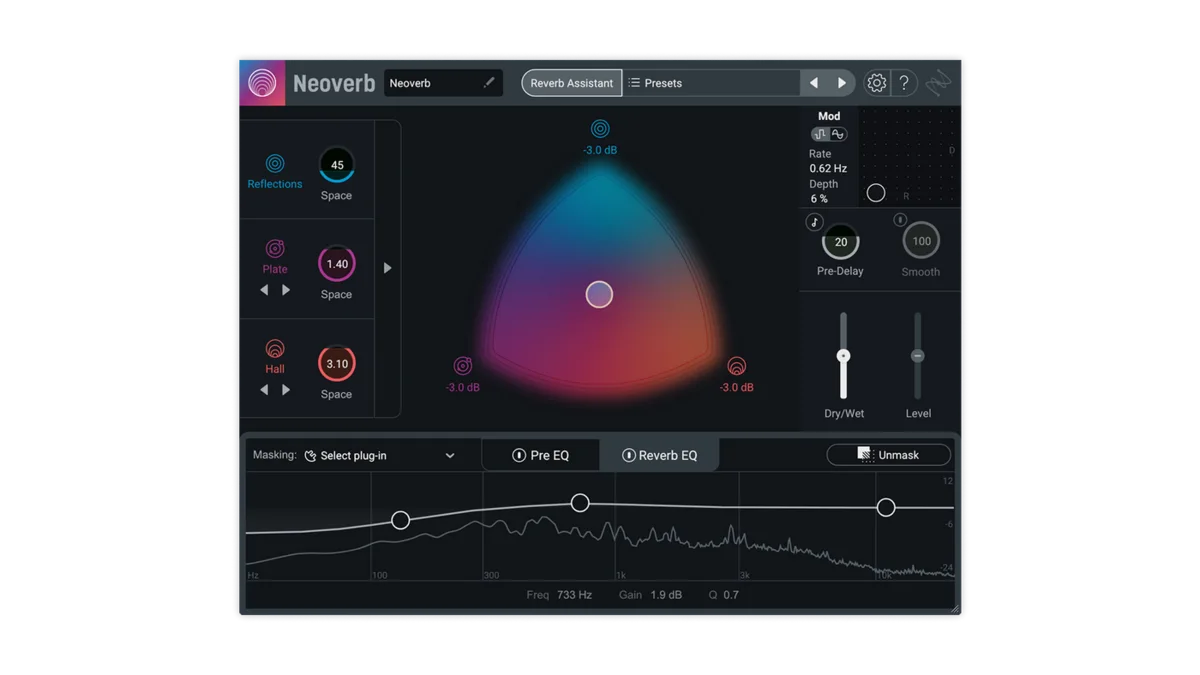
Neoverb stands out for workflow: blend multiple engines from its Blend Pad, use Reverb Assistant as a starting point and spot masking with its EQ tools. In a dense session, quickly finding a space that does not fight the lead vocal can be worth more than a hundred hidden controls.
The catch: an automatic suggestion is a starting point, not a replacement for listening to the arrangement. If you prefer designing every detail by hand, Pro-R 2 or another manual system might suit you better. Explore Neoverb at iZotope ↗
The best reverb is the one that lets the song breathe
Before installing fifteen demos, try this: level-match your comparisons, listen to the tail in context and alternate between a short send that places the source and a longer one that creates emotion. Filtering low end and adjusting pre-delay can matter more than choosing another preset. On vocals, check whether every word survives once the reverb enters; on synths, automate the return so the space follows the arrangement.
Our top three represents three different priorities: VintageVerb for immediate character, Pro-R 2 for precision and Ultiverb for an unusually broad set of controls at no cost. But a list cannot replace your source, your monitors or your judgment. Use the official links, check compatibility and test each candidate on a session you know by heart.
Keep reading